
How Content-Length and Depth Affect Engagement and Conversions
Content-length and depth affect how people experience a page and whether they take the next step. When an article is too short, visitors may feel that important details are missing. When it drags, even strong ideas get lost. Calibrating depth to intent and pairing that work with strategic search engine optimization that helps earn and keep attention.
Why Content-Length and Depth Matter
Search systems and readers look for the same core signals. They prefer content that answers the main question quickly, then offers enough supporting detail to make the answer feel complete. That balance is where content-length and depth work together. Short posts on complex topics often leave gaps. Overly long posts that repeat themselves create friction instead of confidence.
Overviews of content length and user engagement highlight that longer pieces can support more time on page and a stronger perceived value when they stay focused and well-organized. At the same time, SEO content length research shows that word count on its own does not cause higher rankings. Quality, clarity, and usefulness are what give length its impact.
Matching Depth to Visitor Intent
Every topic attracts different kinds of searches. A definition query needs a concise explanation with a small amount of context. A how-to query or comparison search calls for more depth, including steps, examples, and clear trade-offs. Treating each page as a response to a specific type of question is one of the simplest ways to decide how much ground you need to cover.
A practical way to apply this idea is to map content types to intent:
Short, focused explainers that define key concepts for quick answers.
Mid-length guides that walk through a single process in more detail.
In-depth resources that combine explanations, examples, and tools.
Watching how people interact with those formats through analytics makes it easier to refine your approach. If readers spend more time with mid-length guides than with brief posts on the same topic, that may signal that they need more depth before they can act. If very long resources show high exit rates halfway down the page, you may be trying to do too much at once.
Connecting Content-Length, Engagement, and Conversions
Content-length and depth also influence conversions. Longer pages give you more room to answer objections, explain options, and show what a solution looks like in practice. That can build trust, especially for decisions that involve higher costs or complex services. Shorter content can work well closer to the point of action, where readers already understand the basics and simply need reassurance or a quick comparison within a clear SEO strategy.
Internal navigation plays a supporting role. Educational content that explores a topic in depth can link to related resources on analytics, user experience, or local visibility, while conversion-focused pages stay streamlined.
Content-length and depth shape how well a page answers real questions, keeps readers engaged, and supports conversions. When coverage is aligned with search intent, shorter pieces can deliver quick clarity, while mid-length and in-depth content provide the context and examples people need before taking action. By watching how different formats perform, refining structure and internal links, and removing filler that slows readers down, you can turn content-length and depth into deliberate levers that improve both user experience and business outcomes.
Disclaimer: This content is for informational purposes only and does not constitute legal, financial, or professional advice.

A Closer Look at Tracking and Analytics for Local SEO
Tracking and analytics for local SEO help you understand which efforts actually drive visibility, visits, and customers. Rankings alone do not show whether people discover your business, take action, and come back again. When you connect local data with a broader search engine optimization strategy, it becomes easier to decide where to invest time and budget next.
Why Tracking Matters in Local SEO
Local search is highly intent-driven. People often look for nearby services they plan to use soon, which means small improvements can lead to meaningful changes in calls and visits. Without clear reporting, it is difficult to tell whether better rankings, new reviews, or updated profiles are behind those results. A useful view combines visibility, engagement, and conversions. That combination shows whether your business appears in the right places and whether people take the next step once they find you.
Core Metrics To Watch
A practical local SEO dashboard focuses on a handful of metrics that connect to business outcomes. For many organizations, those fall into three groups.
Visibility metrics include local pack rankings, map visibility, and organic positions for location-based queries. These numbers show how often you appear when people search for services in your area.
Engagement metrics capture actions that start from your listings and pages. Views, clicks, calls, messages, and direction requests from search and maps help you see whether people move from curiosity to contact.
Conversion metrics show what happens after that first interaction. Form fills, bookings, tracked calls, and in-store visits that start from local search reveal whether visibility and engagement turn into revenue. Guides on using Google Business Profile Insights explain how to read those actions and connect them to what you see in analytics.
Website analytics completes the picture. Tracking organic sessions from local queries, traffic to location pages, and behavior on key service pages helps you see how local visitors move through the site. If many visitors arrive through local listings and then explore in depth, your structure and messaging are supporting their journey.
Building a Simple Local SEO Reporting Workflow
You do not need a complex setup to gain useful insight from tracking and analytics for local SEO. A straightforward workflow can keep your reporting consistent over time and make it easier to compare one month or quarter with the next. Start by defining success. Decide whether your primary goal is more calls, visits to location pages, direction requests, or a mix of outcomes. Clear goals keep dashboards focused on decisions rather than raw data.
Next, choose your core sources. Most teams blend Google Business Profile Insights, web analytics, and rank tracking tools that focus on local visibility. When you record the same visibility, engagement, and conversion metrics each month, trends become easier to spot and explain.
Link actions to results through simple notes. When you update profiles, add photos, earn reviews, or improve content on key pages, record those changes beside your numbers. Insights from work on tracking and analytics for off-page SEO and AI search show how aligning activities with reporting helps teams understand which moves create lasting improvements.
Finally, connect local reporting with your wider search engine optimization plans so local work does not sit in a separate silo. When local visibility improves at the same time as organic performance across your main service content, it suggests that your efforts are reinforcing each other.
Key Takeaways
Understanding tracking and analytics for local SEO is less about mastering every possible metric and more about focusing on signals that tie directly to how people find and choose your business. A clear framework helps you read those signals without getting lost in the details.
Local SEO reporting should bring together visibility, engagement, and conversion metrics in one view.
Google Business Profile Insights and analytics data work best when you review them on a regular schedule.
Notes that link profile changes, content updates, and campaigns to results make patterns easier to see.
Local performance becomes more meaningful when you evaluate it alongside the wider search presence and content strategy.
Over time, a steady loop between activity, tracking, and analysis turns local SEO into a deliberate practice instead of a set of one-off fixes. Clear structure in your reporting makes it easier to adjust campaigns, strengthen what works, and build a more dependable presence in local search results.
Disclaimer: This content is for informational purposes only and does not constitute legal, financial, or professional advice.

Is Your Content Structure and Readability Hurting SEO?
Content structure and readability influence how people experience your site and how search engines judge it. When pages are hard to scan or feel overwhelming, visitors leave quickly, and rankings suffer, even with solid technical work and ongoing search engine optimization work in place.
Why Structure and Readability Matter for Search
Search engines want content that answers a question clearly. Headings, short paragraphs, and logical sections help algorithms understand what a page covers. The same elements help readers decide, within seconds, whether they are in the right place.
Guidance on SEO content best practices from Michigan State University notes that the structure and wording of a page affect how people and search engines interpret it. Packing blocks of text with repeated keywords might feel like optimization, yet it usually hurts readability and weakens performance.
Readable content also supports trust. When visitors can follow your argument without effort, they stay longer, explore more pages, and are more likely to return. Healthy engagement signals tell search systems that your content structure and readability are helping people, not getting in their way.
Warning Signs Your Content Is Holding You Back
You do not need a complex audit to spot basic problems. Common warning signs include:
Long paragraphs that fill an entire mobile screen
Headings that sound clever but do not describe the topic
Sudden jumps between ideas with no transition
Sections that repeat the same point with slightly different wording
Analytics can confirm what you see. If a page earns impressions but has poor click-through rates, the title and description may not match the content. When people click and then leave quickly, the opening screen or layout probably fails to match their expectations.
The University of Missouri at St. Louis explains in its overview of content and SEO fundamentals that high-quality content aligns with intent and presents ideas in a structured way. Clear organization makes it easier for search engines to understand relevance and for visitors to stay engaged.
Practical Ways to Improve Structure and Readability
You can improve content structure and readability in small iterations.
Start with headings. Read them in order and ask whether they form a simple outline of the topic. If the story feels disjointed, revise headings so they answer the key questions your audience asks.
Next, adjust paragraph length so each paragraph covers one main idea. Shorter sections are easier to skim on any screen. When a block feels crowded, split it and add a brief transition sentence instead of leaving a single dense paragraph. Techniques like these also support on-page content optimization for better user experience.
Finally, review your internal links. Educational articles about structure or user experience should point toward deeper resources on strategy. Connecting those posts to your core search engine optimization services page helps visitors move from learning to evaluation on the main site.
Key Takeaway
Content structure and readability will not replace other SEO efforts, but they often decide whether those efforts work. A page that loads quickly and targets the right query still needs accessible language and a clear layout.
As a practical habit, choose a handful of important pages each quarter and review them with one question in mind. Is your content structure and readability helping people understand this topic as quickly as possible?
Disclaimer: This content is for informational purposes only and does not con

On-Page Content Optimization for Better User Experience
On-page content optimization for better user experience connects how pages read with how they perform. When headings, copy, and layout are structured around real visitor needs, people find answers faster and stay longer, which supports broader search goals and initiatives such as strategic search engine optimization services.
Why User Experience Belongs at the Heart of On-Page Optimization
Most visits begin with a question, not a keyword list. If the title, opening lines, and first screen confirm that a page understands the problem, people are more likely to keep reading instead of bouncing back to search results. That early reassurance is a core part of user experience and a practical outcome of thoughtful on-page optimization.
Guidance from Google on creating helpful, reliable, people-first content explains that pages should be written for readers first and ranking systems second, with clear answers and useful details that match real intent. When content structure and readability reflect that mindset, engagement metrics improve and search systems gain stronger signals that a page is satisfying visitors.
Make Content Easy to Scan and Understand
On most screens, people skim before they commit. On-page content optimization for better user experience respects that habit. Each section should focus on one main idea, expressed in a descriptive heading that sets expectations for what follows. Short paragraphs and clear topic sentences help readers decide where to slow down.
Readability research in user experience design shows that clear language and simple visual hierarchy make it easier for people to absorb information. For a digital marketing team, that means treating headings, line length, and spacing as deliberate choices. Small changes in text presentation often lead to better engagement.
A few habits help teams move in the right direction:
Use headings that answer a question or summarize the main point of each section.
Limit paragraphs to one primary idea to keep scanning effortless.
Place the most important answers and examples near the top of the page.
Connect Content, Navigation, and Measurement
On-page work for a better user experience extends beyond individual paragraphs. Internal links help visitors move from broad explanations to focused resources without getting lost. Thoughtful navigation and inline links act as signposts that show people where to go next while reinforcing core topics promoted through search engine optimization.
Technical aspects of user experience also play a quiet but important role. Fast loading pages, stable layouts, and mobile-friendly design reduce friction as people scroll and tap. Google page experience guidance notes that performance and responsiveness shape how visitors perceive a site and that strong page experience supports better outcomes in search.
Measurement ties everything together. Watching how visitors interact with content, where they slow down, and when they leave, can highlight sections that need clearer language or better structure. Insights from analytics-focused content, such as discussions of tracking and reporting on off-page SEO and AI search, can help teams translate engagement data into practical changes on individual pages.
To keep improvements sustainable, many organizations adopt a review rhythm. Each quarter, they select a few high-value pages, review engagement metrics, and refresh structure and wording where needed. Over time, adjustments to on-page content optimization compound so pages become easier to read, better aligned with real intent, and more likely to earn attention in evolving search results.
Disclaimer: This content is for informational purposes only and does not constitute legal, financial, or professional advice.

Advanced Schema Markup for Local SEO on Service Pages
Advanced schema markup for local SEO on service pages helps search engines understand exactly who you serve, where you operate, and which offerings matter most. When you pair clear local signals with strategic search engine optimization, your service pages can qualify for richer results, local packs, and AI-driven summaries that highlight your most valuable work.
Why Advanced Schema Matters for Local Service Pages
Schema markup for local SEO gives search engines a structured version of your business details instead of leaving them to infer everything from the page copy. LocalBusiness and Service schema can describe your name, address, service area, contact details, and specific services in a machine-readable way. This clarity supports better local visibility and richer search snippets.
Local service pages benefit when the markup lines up with what is actually on the page. A plumbing repair page, for example, can declare the service type, the provider, and the cities covered. That alignment makes it easier for search and AI systems to connect your page with queries that include both a service and a location.
Choosing the Right Schema Types and Properties
A practical local schema strategy usually starts with the homepage and core location pages, then extends to individual services. Common elements include:
A LocalBusiness entity that describes the company, address, phone number, and hours.
Service entities on key service pages, each linked back to the provider.
Supporting types such as BreadcrumbList or FAQPage when those elements exist on the page.
Within each type, you can go beyond the bare minimum. Adding properties for geo coordinates, service areas, review snippets, and price ranges helps search engines draw a more complete picture of your local presence and may improve how your site appears in enhanced listings or carousels.
Implementing Schema Markup on Service Pages
Most teams use JSON-LD to deploy schema markup because it keeps the code separate from the visual layout and matches Google’s preferred format. You can build it manually, use generators, or deploy it through a tag manager, as long as the final output stays accurate and consistent with the visible content on the page. A simple workflow might look like this:
Map your priority services and locations.
Decide which pages will carry LocalBusiness, which will carry Service, or both.
Generate JSON-LD that reflects the on-page copy for each service.
Test your markup in Google’s Rich Results Test and Search Console.
Measuring Impact and Maintaining Clean Data
Schema markup does not replace strong content or links, but it can improve how your information appears in search results and support higher click-through rates. Tests have shown that rich snippets generated by structured data often attract more clicks than plain listings, which can amplify the impact of the rankings you already hold.
To keep your implementation reliable, schedule periodic reviews of your structured data alongside organic performance. Watch for changes in impressions and clicks on your local service pages, and use tools that surface schema warnings or errors. Analytics and tracking, similar to work you might do around tracking and analytics for off-page SEO and AI search, can help you connect schema updates with shifts in visibility. As part of a broader search engine optimization approach, refined schema markup gives your local service pages a stronger foundation in evolving search and AI experiences.
Disclaimer: This content is for informational purposes only and does not constitute legal, financial, or professional advice.

Tracking and Analytics for Off-Page SEO and AI Search
Off-page SEO is harder to measure than on-site work because much activity happens off your domain. AI-driven search adds another layer of complexity. To see whether link building, digital PR, and brand mentions support your broader search engine optimization strategy, you need tracking that ties off-page activity to outcomes.
Why Tracking Off-Page SEO Still Matters in AI Search
As AI overviews and answer engines summarize results, they lean on sites with strong authority and a clean backlink profile. A solid foundation of off-page work supports visibility in traditional rankings and helps AI systems feel more confident reusing your content.
Effective tracking starts with a few practical questions. Which campaigns are earning new, relevant links? Which mentions are driving referral traffic and branded search? How often does fresh coverage coincide with ranking gains for your priority pages? Clear questions prevent dashboard overload and keep reports focused on decisions, not just data.
Core Metrics for Off-Page SEO Tracking
Backlink, referring domain, and anchor text data from dedicated SEO platforms become more useful when you pair it with analytics. Joining those numbers with on-site engagement makes it easier to see which links send qualified visitors and which mainly reinforce authority. Watching trends in brand search, direct traffic, and mentions over time can reveal whether your broader visibility is growing.
Many guides on off-page performance recommend focusing on a small set of indicators instead of chasing every metric. A simple scorecard might track:
New high-authority referring domains earned each quarter
The share of links that point to strategic pages and resources
Referral traffic and engagement from your most visible placements
Changes in rankings for queries tied to those linked URLs
Step-by-step guides to analyzing off-page SEO performance can help you refine that list and turn a long collection of numbers into a review you repeat regularly.
Bringing AI Search Signals Into Your Analytics
AI-driven search introduces new questions. You cannot yet pull a single metric for “AI overview appearances,” but you can watch related shifts. Changes in click-through rates on informational queries, differences in how visitors arrive from organic search compared with branded or direct traffic, and feedback from customers about how they discovered you all contribute to the picture.
Guidance from Google on AI features and your website explains how AI results are generated and how site owners can think about inclusion. Research on off-page SEO and AI search suggests that pages earning links from diverse, trusted sources tend to appear more often in synthesized answers.
Turning Insights Into Actionable Off-Page Strategy
If reports show that a few publications routinely send engaged visitors, it makes sense to deepen those relationships with fresh ideas and collaboration. When you see that new links rarely point to your most important product or service pages, consider outreach that highlights those assets more clearly within your overall search engine optimization plan.
Over time, a steady loop between off-page activity, analytics, and AI search behavior helps you refine your strategy instead of reacting to every surface-level metric. Rather than chasing any link opportunity, you can prioritize coverage that strengthens authority, supports key topics, and aligns with how people actually discover answers in evolving search experiences.

5 Ways Social Sharing Features Upgrade Your Digital Strategy
For many businesses, social sharing is still treated as an afterthought—something you add at the end of a blog post or page. In reality, well-planned social sharing features can make your content easier to distribute, track, and optimize across channels. Looking at how your social sharing features connect with SEO, content, and conversion is often the first step toward a more effective digital marketing strategy.
1. They Make Content Easier to Share
If visitors have to copy and paste links manually, most won’t bother. Clear, accessible sharing buttons on key pages and posts lower the effort required to talk about your brand. Thoughtful placement matters. Buttons that appear at the top and bottom of an article, or that float alongside longer pieces, gently remind readers to share when they find something helpful. Over time, this can increase the organic reach of your best content without adding more ad spend.
2. They Improve How Your Brand Appears on Social
Social platforms pull data from your pages to generate link previews. Without the right tags in place, you may end up with cropped images, generic titles, or confusing descriptions.
Combining good UX with a strong technical foundation, as you’d see on a website design & development project, helps you control how your content appears when shared. Clean titles, compelling descriptions, and correctly sized images all support stronger engagement when your audience posts your links.
Quick checklist:
Do your shared links show a clean, readable title?
Is the preview image relevant and correctly cropped?
Does the description make someone want to click?
If the answer is “not always,” your social sharing setup is probably due for an update.
3. They Help You See What’s Actually Working
Modern social sharing features can feed data into your analytics, so you’re not guessing which articles or pages people want to share. Tracking share counts, referral traffic, and on-site behavior after a click can reveal which topics and formats drive the most interest.
This isn’t just a vanity metric. When you know which content earns the most organic shares, you can lean into those themes in future campaigns and build a more data-driven content calendar.
4. They Connect SEO, Content, and Social
Search, content, and social distribution work best when they support each other. Google’s guidance in their SEO Starter Guide emphasizes clarity, structure, and helpful content as foundations for visibility. When that content is also easy to share, you create more opportunities for others to discover and link to it.
An educational article like What Is Search Engine Marketing? can introduce key concepts, earn shares, and then point readers to deeper resources and services. In this way, social sharing features help each strong piece of content do more work across the funnel instead of living in a single channel.
5. They Support a More Connected Strategy
If social media, SEO, and content are all run separately, it’s hard to see the bigger picture. Integrating social sharing features into your site and campaigns makes it easier to understand how each channel contributes to results.
You can review performance regularly, identify content that attracts both search traffic and social engagement, and decide where to invest next. Over time, this turns “post and hope” activity into a more predictable system for generating awareness and demand.
Upgrading your social sharing features isn’t just a design tweak—it’s a strategic move that affects how easily people can distribute your content and how clearly you can measure what happens next. If you’re rethinking how social, search, and content fit together, start with the SEO, web design, and blog resources at a reputable digital marketing provider.

The Hidden Relationship Between Content Length, Expertise, and E E A T
Search engines evaluate more than keywords when determining which pages deserve visibility. Content length and depth now play important roles in shaping how a page demonstrates expertise, experience, authority, and trust. When content answers questions thoroughly and provides meaningful guidance, it signals value to both users and search systems. A strong SEO foundation helps amplify these signals and improve long-term visibility.
Why content depth matters
Long-form content gives writers room to explain complex topics with clarity. Search engines recognize thorough explanations as indicators of expertise, especially when content provides practical steps, specific examples, and carefully organized insights. These qualities support E E A T by showing that the brand understands the subject and can guide users effectively.
Depth does not mean adding unnecessary information. High-performing content stays focused on the reader’s needs and avoids filler. When visitors stay on the page longer and scroll through multiple sections, these behavioral signals reinforce the perception of quality.
The role of structure in supporting expertise
Content that follows a logical structure helps users and search engines understand the information more clearly. Organized sections, descriptive headings, and concise transitions all contribute to stronger user engagement. Well-structured content is easier to navigate on both desktop and mobile devices, which supports better outcomes in search.
Internal linking strengthens this structure by guiding readers to related topics and deeper resources. These connections help search engines understand how your content ecosystem fits together and support your overall SEO strategy.
How content length influences trust
Trust signals emerge when content feels complete and reliable. Short pieces may answer quick questions, but longer content often demonstrates why a source is worth trusting. Sections that include research, professional insights, or step-by-step explanations help users feel confident in the information.
Search engines evaluate these signals to determine whether a page contributes meaningfully to a topic. Content that reflects real experience or references credible information tends to perform better because it reduces uncertainty for the reader.
Independent research reinforces this connection. Studies show that comprehensive content is more likely to earn backlinks, appear in topical clusters, and show up in higher visibility placements.
How depth supports authority and topical strength
Search engines value content that explores a subject from multiple angles. When you address related questions, clarify misconceptions, or provide supporting context, your page signals greater topical strength. This approach helps search systems rank your content alongside other authoritative sources.
Depth also gives you room to demonstrate experience by sharing examples, observations, or comparisons. These elements strengthen E E A T and show users that your perspective is grounded in real understanding.
Support long-form content with complementary resources
Content length works best when supported by additional reading paths. Linking to complementary articles, guides, or tutorials encourages users to explore more of your content ecosystem.
Content length helps shape modern trust signals
Balancing length and depth helps businesses demonstrate the qualities search engines reward. When content offers meaningful guidance supported by clear structure, user engagement improves and trust grows. As search systems continue refining how they evaluate expertise and authority, businesses that provide comprehensive, well-organized content will maintain stronger visibility and stronger user confidence.

The Role of Mobile Page Experience in Local Search Results
Mobile users make fast decisions, and search engines know it. Local search results increasingly prioritize businesses that provide a smooth mobile page experience. When pages load quickly, display clearly, and respond without friction, nearby users are more likely to stay engaged and convert. Strong mobile optimization supports your broader SEO strategy and strengthens your position in local results.
Why mobile experience matters for local visibility
Local searches often come from people on the move. These users expect quick answers, clear information, and simple navigation. Search engines evaluate signals such as load speed, layout stability, and touch friendliness to determine whether a page creates a positive experience. Businesses that meet these expectations gain more visibility when users search for services in their area.
Mobile page experience also affects how long visitors remain on your site. When content loads within a few seconds and displays without clutter, users are more likely to explore additional information. These engagement patterns support both search visibility and local relevance.
Page speed and responsiveness influence local performance
Mobile users expect fast results, and slow pages can lead to immediate drop offs. Improving load speed helps reduce frustration and increases the likelihood that users will continue reading or contacting your business. Responsive design also plays a role by ensuring pages adapt smoothly to different screen sizes.
Search engines evaluate these indicators to determine whether your site provides a reliable experience. A well-structured SEO foundation further strengthens the impact of responsive design and supports long-term performance.
Local intent and mobile-friendly layouts
Mobile searches often include phrases like near me or nearby services. When your content is organized clearly and provides easy pathways to key information, search engines recognize your site as a strong match for these queries. Simple navigation, uncluttered layouts, and accessible contact details help users take action without barriers.
This clarity also helps search engines understand your relevance to local intent. Pages that make it easy for mobile users to find locations, hours, or service details often outperform competitors who rely on desktop-first designs.
Mobile usability signals strengthen trust
Mobile page experience is part of how search engines measure trust. Pages that display consistently, avoid accidental taps, and remain stable during loading demonstrate reliability. These usability signals help search engines determine whether your content offers value to nearby users.
Independent research highlights the importance of mobile usability. Studies show that mobile-friendly sites consistently outperform non-optimized pages in both engagement and search visibility.
Support local search with complementary content
Mobile-friendly pages work best when supported by relevant content and clear internal linking. Local landing pages, service guides, and simplified contact paths help users understand your offerings quickly. When these elements work together, you create a mobile experience that leads to stronger engagement and higher local placement.
Mobile experience shapes user expectations
Mobile page experience helps determine how users perceive your business and whether they choose to engage. Clear design, fast loading, and accessible information support both search performance and user satisfaction. As mobile behavior continues to shape how customers find local services, businesses that focus on mobile optimization build stronger visibility and stronger community relationships.

How AI Is Transforming Search Optimization and Internet Marketing
AI has reshaped how search engines evaluate content, understand user intent, and determine which pages deserve visibility. These systems now use influence and trust signals to measure credibility, reduce misleading results, and highlight content that demonstrates expertise. Businesses that understand how AI evaluates information gain an advantage in search visibility and user trust. A strong SEO foundation strengthens these signals and supports long-term performance.
AI understands meaning instead of matching keywords
Modern search systems rely on natural language models that interpret context, intent, and relationships between concepts. This shift rewards clear explanations, structured content, and strong internal linking patterns. AI is designed to identify connections between topics and evaluate how well a page answers the deeper purpose behind a search query.
Search engines now consider signals such as reading patterns, navigation flow, and content depth. These indicators help determine whether users find the information meaningful. When search engines detect strong alignment, they associate the page with higher quality, which improves visibility.
Trust signals shape how AI ranks information
AI uses a combination of trust metrics to determine which content to surface. These include accuracy, consistency, source reputation, and how well the topic matches the expertise of the publisher. Businesses that demonstrate authority through high-quality educational content, reliable service information, and consistent messaging see stronger performance in AI-supported search environments.
Structured site architecture also plays a significant role. Internal linking guides search engines through a clear topic path and improves understanding of your content ecosystem.
Influence signals guide AI toward credible sources
Influence signals describe how other sites, users, and platforms respond to your content. When reputable websites reference your insights or when customers engage meaningfully with your pages, AI recognizes these signals as indicators of reliability. This helps reinforce your presence across search, recommendations, and AI-generated summaries.
Independent research supports this approach. Studies show that AI systems value sources with strong topical consistency and identifiable expertise. These conditions help reduce misinformation and improve the accuracy of content surfaced in search.
AI improves personalization and response quality
AI systems adjust search results based on user behavior, previous queries, and long-term patterns. This personalization helps users find more relevant content faster, which increases the importance of trust signals. When users remain on your page longer or visit multiple resources, search engines identify this as evidence of satisfaction.
Businesses that publish clear, helpful, and well-structured content see stronger performance as AI learning models continue refining their understanding of what users prefer.
Support AI visibility with complementary content
AI-driven search environments reward businesses that produce interconnected, reference-rich content. Supporting articles, guides, and long-form explanations help AI map relationships between topics and interpret your expertise more accurately. A complementary offsite article explains how content structure improves visibility in AI-supported search experiences.
AI is changing the path to visibility
Influence and trust signals help AI determine which content deserves attention. Businesses that invest in educational resources, transparent communication, and strong SEO foundations strengthen these signals. As AI continues shaping how users interact with information, the brands that provide reliable, well-structured insights will see the strongest search performance and user engagement.

How Schema Markup Helps Your Website Stand Out in Search Results
Schema markup helps search engines understand the meaning of your content and present it more effectively in results. It clarifies what each page offers, improves how information appears to users, and strengthens the foundation of your broader SEO strategy. When schema works alongside a structured search approach, the combined effect improves visibility in both traditional and AI assisted search environments.
Why Structured Data Matters for Visibility
Structured data gives search engines clear signals about a page’s purpose. When properly implemented, schema markup helps search engines extract details such as article structure, authorship, business information, and key page attributes. These signals help pages qualify for enhanced results that attract more attention and stronger engagement.
The Role of Schema in AI Supported Search
AI driven search experiences increasingly rely on structured context instead of simple keyword matching. When AI models generate summaries or recommendations, they prioritize content that provides clearly defined entities, relationships, and attributes. Schema markup supplies that clarity, making it easier for AI systems to interpret information accurately.
AI summaries often draw from pages that demonstrate relevance, structure, and confidence. Schema improves all three by eliminating ambiguity. Pages that identify content types, topics, and core attributes are more likely to appear in AI generated responses than pages without clear structure.
How Schema Improves Engagement
Schema increases engagement by setting accurate expectations before the user even arrives on the page. Rich results with FAQs, ratings, or article details give visitors confidence that the content aligns with their needs. This reduces bounce rates and encourages deeper exploration once the user clicks through.
Engagement strengthens further when internal linking supports the structure established by schema. Internal links create a logical path through related pages and help search engines understand how your topics connect.
Types of Schema That Support Business Visibility
Article Schema
Provides structured information about publishing details. This helps search engines categorize your articles more accurately, which is especially important for AI-driven results.
Local Business Schema
Clarifies operational details such as contact information and service areas. This markup helps your content appear in location-based searches and improves geographic relevance.
Product or Service Schema
Explains the specifics of what your business offers. These details help users identify whether your services match their needs before visiting your site.
FAQ Schema
Presents questions and answers in a structured format that works well for both rich results and AI summary extraction.
Schema and Collaborative Opportunities
Clear structured data reinforces co-marketing efforts by making your content easier for partners to reference. When schema defines topics and attributes precisely, collaborators can link to your resources with confidence that the information they highlight is accurate.
Support Schema With Complementary Content
Schema works best alongside content that provides depth, clarity, and structure. Publishing supporting articles and resource pages helps search engines recognize your expertise and understand the relationships between your topics.
Tracking Results From Structured Data
Schema improvements appear gradually as search engines revisit and interpret your pages. Tracking impressions, rich result appearances, and click-through rates helps measure progress. Consistent updates to markup, content clarity, and internal linking ensure that your pages continue gaining visibility across search experiences.
Schema markup enhances visibility by helping search engines and AI systems understand your content more completely. Businesses that adopt structured data early build stronger authority signals and stand out more effectively across every type of search result.

Top Local Link Building Opportunities Most Businesses Miss
Localized link building helps businesses build authority in the communities they serve. These links signal relevance to search engines and improve visibility among people searching for nearby solutions. Yet many organizations overlook valuable local opportunities because they focus only on broad strategies. When local connections support your SEO framework, your digital presence becomes stronger and more trusted by nearby audiences.
Strengthen your foundation with local intent
Localized SEO relies on a website that clearly communicates who you serve and where you operate. Pages that highlight local services, neighborhoods, and regional terminology help search engines understand your geographic relevance. A solid SEO foundation makes every local link more effective and provides a clear path for growth.
Partner with local organizations
Community partnerships give businesses access to established networks. Sponsoring events, supporting nonprofit initiatives, or participating in local workshops often lead to natural link opportunities when organizations share participant details or publish recaps. These mentions help demonstrate local involvement and support long-term visibility.
Earn links from local business directories
Many directories allow free listings that improve authority and help customers find essential details quickly. These entries validate your local presence and often appear in prominent positions when people search for nearby services. Well managed directory profiles strengthen your brand consistency.
Contribute to local media and community blogs
Local news sites and community-focused blogs frequently seek expert contributions and commentary. Businesses that provide insights, data, or interviews earn high-quality links from reputable local sources. These mentions build awareness and reinforce your connection to specific areas or industries.
Build educational content around local topics
Content that focuses on regional trends, regulations, or community needs offers value to local readers and publishers. Articles that highlight local challenges or provide area-specific solutions can attract links from partners who want to reference credible information. This content also guides users deeper into your site through well-planned internal linking.
Collaborate with nearby businesses
Local link building thrives when businesses promote one another during shared events, co-hosted workshops, or joint promotions. These collaborations help audiences discover related services, and they create organic linking opportunities that support both brands.
Use supporting content to strengthen authority
Supporting articles that describe methods, case examples, or neighborhood-based insights add depth to your local SEO strategy. They give partners more linkable resources and reinforce topical authority. A complementary offsite article explains how structured content can support local link building and help guide users toward relevant information.
Engage with community partners consistently
Sustainable localized link building requires consistent participation. Commenting on local forums, sharing community updates, and participating in neighborhood discussions help keep your business visible. These efforts also create opportunities for inclusion in resource lists, event pages, and local roundups.
Localized link building thrives when your digital and community presence work together. By pursuing the opportunities most businesses overlook, you strengthen your visibility among nearby audiences and create long-lasting signals of trust that support your overall search performance.

A Practical Guide to Search Engine Optimization for Small Businesses
Small businesses rely on consistent visibility to stay competitive, but achieving that level of reach requires practical SEO strategies that support long term growth. Strong search performance builds trust, increases discovery, and helps brands connect with audiences who are actively looking for solutions. When these efforts pair with content partnerships and co-marketing, small businesses create a broader ecosystem of visibility that supports sustainable lead generation.
Start with an SEO foundation
Search visibility begins with a strong technical and strategic framework. Small businesses benefit from clear keyword targeting, structured content, and pages that communicate expertise. A well organized SEO strategy creates momentum across every marketing channel and ensures that visitors can find answers quickly.
Build content around customer challenges
Small business SEO improves when content reflects the real problems and questions customers search for. Educational articles, simple guides, and step by step tutorials help position your brand as a trusted resource. These pieces also serve as assets that partners can reference, cite, or share during collaborative campaigns, expanding your reach through co-marketing activities.
Use internal linking to strengthen visibility
Internal links give structure to your website and help search engines understand the relationships between your pages. They guide users to relevant topics and increase engagement by providing natural pathways through your content. A consistent internal linking strategy supports ranking improvements and makes your content library easier for partners to reference.
Leverage content partnerships to extend reach
Content partnerships allow small businesses to introduce their expertise to new audiences without relying on paid channels. When two brands collaborate on an article, guide, or video, each party gains access to a broader network of potential customers. These partnerships reinforce credibility and create stronger signals of relevance for search engines.
Co-marketing as an SEO multiplier
Co-marketing combines the audience reach of two or more organizations. Joint webinars, shared articles, comparison guides, and co-branded checklists help amplify visibility while supporting stronger backlink profiles. Each collaboration introduces qualified users to your business and increases the likelihood of engagement.
Strengthen your authority with supporting content
Supporting articles and resource pages create depth within your SEO strategy. They allow you to explain topics in greater detail and build topical authority that encourages stronger rankings. The better your site can demonstrate authority and expertise, the higher your pages will rank in user searches.
Track performance through user engagement
Measuring engagement helps determine which topics attract meaningful interest. Reviewing time on page, scroll depth, and returning visitor activity reveals which content resonates with your audience. These signals help refine your SEO strategy and guide future content partnerships that align with high-performing themes.
Effective SEO for small businesses comes from pairing strong foundational practices with collaborative content efforts. When your website communicates value clearly and your partners support your insights, search visibility and audience trust grow at the same time.

Ten Internet Marketing Tactics That Drive High-Quality Leads
High-quality leads do not come from traffic alone. They come from the right visitors who stay on the page, interact with your content, and move deeper into your funnel. When brands invest in structured SEO services, they create a foundation that supports every other channel. A focused search strategy aligns content with buyer intent, makes it easier to measure engagement, and transforms organic visibility into a steady pipeline of qualified leads.
Below are ten internet marketing tactics that work together to improve engagement and lead quality instead of just adding more noise to your analytics.
1. Build Search-Driven Content Around Buyer Questions
Start with the questions prospects ask in sales calls, forms, and live chat. Use those topics to create blog posts, guides, and FAQs that match real search behavior. When each article maps to a specific stage in the buyer’s journey, visitors are more likely to stay, click internal links, and submit forms because the content actually matches what they came to find.
2. Strengthen Site Architecture With Internal Linking
Internal links connect service pages, blogs, and resources into a logical path. This helps visitors move from high-level topics to deeper explanations without hunting through menus. It also helps search engines understand which pages deserve the most authority. A clear internal linking strategy is a low-cost way to guide users toward conversion-focused pages and improve visibility for your most important offers.
3. Use Conversion-Focused Service Pages
Service pages should act like landing pages, not simple descriptions. Strong headlines, clear value props, supporting proof, and obvious next steps all influence engagement signals. When a visitor can scan the page, understand the offer, and see how to move forward in a few seconds, form fills and consultation requests climb.
4. Publish Outcome-Focused Case Studies
Prospects want to see what success looks like. Case studies that show clear before and after metrics, specific industries, and documented processes help serious buyers decide whether to reach out. They also keep visitors on your site longer as they compare stories that feel similar to their own situation.
5. Promote Content Through Email Nurture
Email nurtures extend the life of every blog, video, and guide you publish. Segment lists by industry, role, or problem, then send content that addresses each group’s specific concerns. When subscribers click through to posts that speak directly to their priorities, engagement increases and your analytics show a higher ratio of qualified traffic.
6. Use Retargeting to Re-Engage Warm Visitors
Retargeting campaigns remind visitors about pages they already viewed, such as pricing, services, or lead magnets. Instead of chasing cold audiences, you are inviting people who already showed intent to come back and finish what they started. That second or third visit often has stronger engagement and a higher chance of converting into a lead.
7. Optimize Visuals and Layout for Readability
Cluttered layouts and dense paragraphs drive people away even if the content is strong. Short sections, clear subheadings, and supporting visuals make it easier to scan and stay. When the page feels simple to navigate, users scroll further, interact with more elements, and are more willing to complete forms or click deeper into your site.
8. Align Paid Campaigns With Organic Landing Experiences
If paid ads promise one message and the landing page delivers another, bounce rates spike. Coordinate your ad copy, keywords, and landing content so that visitors see the same theme from impression to conversion. This consistency improves user trust, keeps people on the page longer, and turns more of your paid clicks into high-quality leads that continue engaging with your brand.
9. Leverage Authoritative SEO Education as Proof Points
Authoritative SEO publications consistently show that internal links, content quality, and site structure shape how search engines evaluate pages. Referencing trusted resources can reinforce your recommendations during sales conversations and strategy presentations, especially when you explain how better internal linking and content alignment support engagement and ranking.
10. Support Tactics With a Scalable Internal Linking Plan
As your library of blogs, guides, and service pages grows, internal linking cannot stay random. It needs a structure that can scale. Strategic patterns that connect pillar pages, supporting articles, and deep resources help distribute authority and keep visitors moving through your ecosystem instead of dropping off after a single read.
When these ten tactics work together, user engagement factors improve across the board. Visitors spend more time reading, interact with multiple pages, and reach out when they recognize that your digital presence is built to guide them through a thoughtful buying process instead of pushing them through a quick click.

URL Structure + Content Clustering: A Combined Approach for Local SEO Domination
Many businesses focus on keywords and backlinks but overlook how much URL structure and content clustering influence visibility. Together, these elements help organize information, improve crawling, and build local authority across multiple cities.
Why Structure and Clusters Belong Together
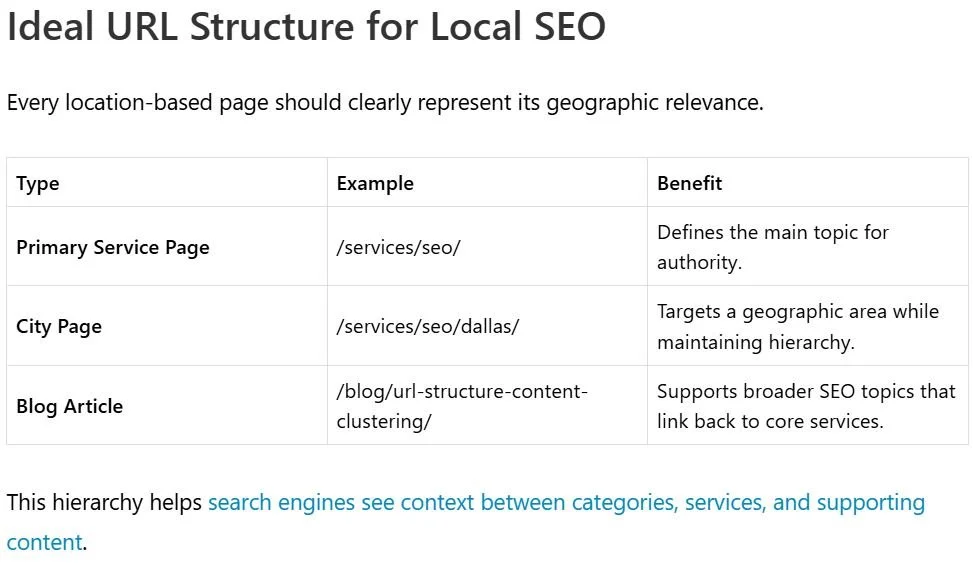
A clean URL structure tells search engines how your content connects. Clusters take it further by grouping related pages under a common topic. This combination ensures every new blog or service page reinforces your brand’s local expertise. When structure and clustering align, search engines interpret relationships faster, and visitors navigate your site more naturally.
Building a Cluster Around Local Pages
Clusters revolve around a central pillar page—often your main service or location hub. Supporting pages then link to and from that hub, forming a structured web of authority.
A simple model:
Pillar page: “SEO Services” overview
Cluster pages: City-specific pages (e.g., Dallas, Austin, Denver)
Supporting blogs: Localized articles that feed authority into each cluster
This structure lets link equity flow naturally across your domain and strengthens topical relevance for every region.
5-Step Clustering Workflow
Audit existing URLs. Identify overlapping or duplicate paths.
Group content by topic. Assign each cluster a clear pillar.
Standardize naming conventions. Keep slugs short, lowercase, and keyword-relevant.
Add internal links. Use contextual anchors between blogs and service pages.
Review analytics quarterly. Consolidate or update weak-performing clusters.
Following these steps makes your structure scalable as you expand into new cities or verticals.
Common Mistakes to Avoid
Using dynamic URLs with random strings like ?id=345.
Creating multiple paths for the same page.
Forgetting to redirect outdated slugs after redesigns.
Publishing isolated blogs that don’t connect to a service page.
These small errors can confuse crawlers and limit ranking potential across local markets.
Combine Local Schema and Clusters
Add LocalBusiness schema to pillar pages and reference key service URLs inside it. This reinforces location intent and strengthens internal relationships that are essential for local SEO domination.
Related Reading
Explore more technical and local optimization topics. It will quickly become obvious how local SEO plays a role in attracting visitors that will, in turn, be converted into new leads and customers. Full implementation takes time, but results will become noticeable every step of the way.
Final Take
URL structure and content clustering form the foundation of scalable, high-performing local SEO. When built strategically, they give search engines the clarity they need to rank your business higher in every market you serve. Keep in mind that each location is not a new website, but rather an extension of your services into new regions or markets.

Creating Geo-Targeted Blog Content That Drives Local Traffic
A business can’t dominate every market with one-size-fits-all messaging. To reach nearby audiences and boost visibility, brands must embrace location-based content creation. By tailoring posts to specific cities, regions, or communities, you can connect with audiences more personally and improve search relevance.
Why Geo-Targeted Content Matters
Local customers expect relevance. Writing blog content that references nearby landmarks, seasonal needs, or regional issues signals authenticity. Search engines notice by rewarding pages that demonstrate local authority. Each post becomes part of your SEO strategy, helping to build credibility at the local level.
Geo-targeted blogs enhance:
Search relevance: Content includes city or regional terms that users search for.
Engagement: Readers connect with content that feels “close to home.”
Conversions: Proximity-based trust increases inquiries and foot traffic.
How to Identify Local Content Opportunities
Start with data and local awareness.
Analyze search trends for city-based keywords (e.g., “marketing services in Austin”).
Review competitor coverage to find unclaimed topic gaps.
Monitor Google Business Profile insights to see which regions generate activity.
Ask customers directly what local information they find helpful.
These insights help you plan content that speaks to real community interests rather than generic SEO filler.
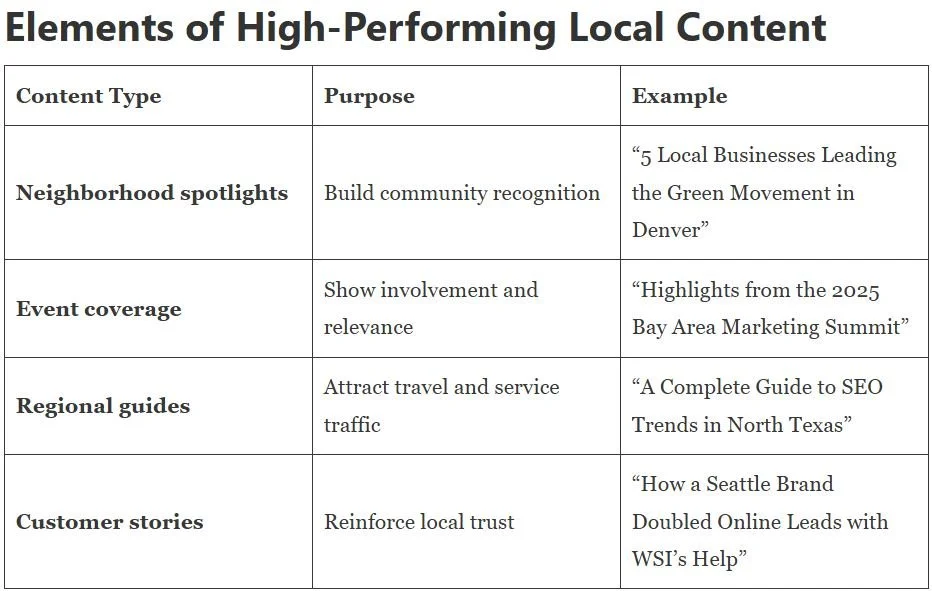
Balancing human interest with strategic keywords keeps content valuable to both readers and search algorithms.
Content Creation Best Practices
Keep tone authentic. Write for locals, not search engines.
Include real names and places. Specific details make posts credible.
Use structured headings. Reinforce location terms naturally.
Link internally to regional service pages for authority flow.
Update seasonally. Local priorities change with time and trends.
Regular updates help maintain freshness—an essential signal for search engines and returning visitors.
Expanding to Multiple Markets
When scaling your marketing strategy to multiple locations, it’s important to treat each region as a distinct audience with its own needs, culture, and search behavior. This approach allows your content to feel authentic and relevant rather than repetitive or generic. Localized storytelling, visuals, and references help each page connect more meaningfully with nearby customers while strengthening overall brand cohesion and SEO performance.
Avoid duplicating the same blog template across cities.
Use consistent brand messaging but localize examples, photos, and quotes.
Interlink between location pages to distribute authority evenly.
This approach ensures every market feels individually addressed, not copy-pasted.
Measuring Success
Measuring the success of location-based content requires tracking the right performance indicators that reveal how effectively your pages connect with regional audiences. Key performance indicators include increased impressions for geo-modified keywords, steady traffic growth from local search results, stronger engagement metrics from visitors within target regions, and higher conversion rates driven by city-specific calls to action that resonate with nearby customers. Track these through analytics dashboards and Google Search Console to prove ROI..
In Conclusion
Location-based content creation isn’t just an SEO tactic—it’s a trust-building strategy. By reflecting the needs, voices, and values of your community, you can attract qualified leads, outperform national competitors, and strengthen your brand’s local footprint.

Local SEO & Citations: How to Rank Across Multiple Cities Without Penalties
Expanding into new markets sounds exciting, but it can quickly become risky when duplicate content, inconsistent listings, or spammy tactics start damaging visibility and credibility. Companies that operate across multiple cities must maintain consistent business information, localized relevance, and search engine compliance at the same time. Mastering local SEO and citations is crucial for companies serving multiple cities while keeping search compliance intact.
The Multi-City Challenge
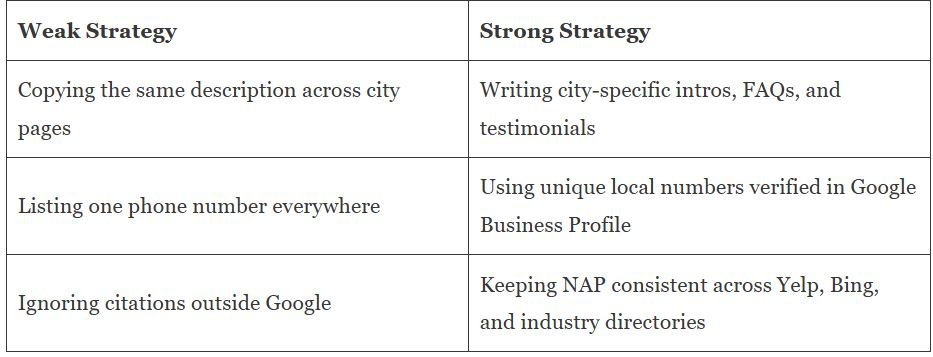
When Google detects identical business data across different locations, it struggles to understand which listing is authoritative. This confusion often results in diluted visibility. The goal is to maintain unique local signals for each market while reinforcing brand consistency.
Citation Hygiene
Before expanding your local presence, start by confirming that your core data foundation is accurate and consistent across every platform. Your Name, Address, and Phone number (NAP) must match exactly on your website and all directory listings. Each location should have a verified Google Business Profile, consistent business categories, and its own unique landing page URL. High-authority citations—such as Chamber of Commerce memberships, Better Business Bureau listings, and reputable regional directories—further strengthen credibility. Clean, unified citations form the backbone of local trust signals and help ensure your listings remain visible and competitive in search results.
The Multi-Location SEO Playbook
Start with structured data. Use LocalBusiness schema on every city page.
Build localized content. Highlight community projects, local staff, and reviews.
Interlink location pages. Create a “Find Us” hub to distribute authority evenly.
Embed maps properly. Each page should point to its specific Google Maps URL.
Audit quarterly. Remove duplicates and update changed addresses immediately.
This proactive approach maintains ranking stability while scaling your reach.
Avoiding Common Penalties
Many businesses unintentionally trigger red flags with aggressive expansion. Steer clear of these missteps.
Keyword stuffing city names in titles or headers
Duplicating contact info across unrelated locations
Creating doorway pages that add no value to users
Submitting fake listings or unverifiable addresses
Penalties for these violations can erase years of SEO progress, making prevention vital.
Beyond Citations: Building Local Reputation
Once your structure is solid, build local credibility through off-page signals. These authentic connections boost visibility faster than directory submissions alone.
Encourage genuine customer reviews for each city page.
Partner with local media or chambers for backlinks.
Sponsor regional events to earn authoritative mentions.
Related Reading
Explore more optimization techniques, starting with this blog post that discusses the importance of onsite local optimization. For end-to-end support in scaling across markets, add the services of an experienced website marketer to your ongoing strategy.
Final Take
Local SEO and citations make growth sustainable when executed with precision. By maintaining consistent data, unique local content, and ethical link strategies, your business can rank confidently across multiple cities without risking penalties or confusion.

How to Build a Scalable Internal Linking Architecture That Scales with Your Site
As websites grow, so does complexity. Using a scalable internal linking plan is essential in surfacing the data visitors are looking for. An organized structure allows search engines and visitors to find relevant information fast, strengthening authority and engagement.
The Foundation: Why Internal Links Matter
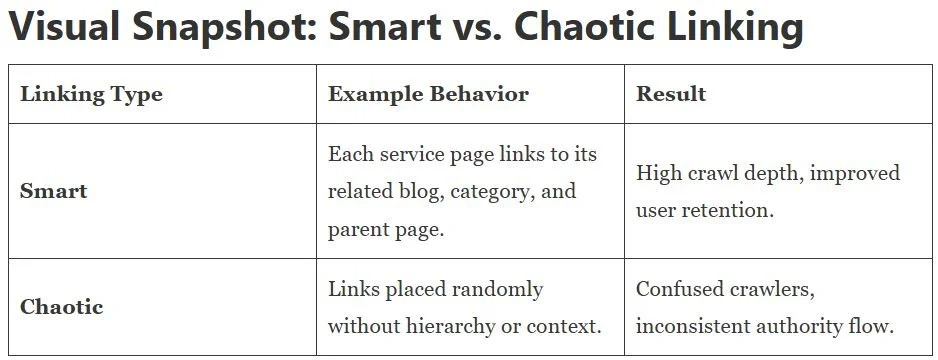
Internal links distribute authority across your domain and help search engines understand how pages relate to one another. They enhance user navigation by guiding readers to deeper, relevant content, strengthen page authority by channeling equity from high-value pages, and improve crawl efficiency so that new content is discovered and indexed more quickly, supporting stronger overall SEO performance. When implemented correctly, internal linking is one of the highest-ROI elements of your SEO strategy.
Design Principles for a Scalable Structure
Instead of adding links ad hoc, build the site with focused intent. It is an evolving ecosystem where each new page plugs naturally into existing pathways. The general pattern looks something like this:
Create pillar pages for broad topics (e.g., “Digital Marketing Services”).
Link out to supporting pages that cover subtopics in depth.
Connect back to the pillar to reinforce hierarchy.
Use breadcrumbs to help both users and crawlers navigate.
Review orphaned pages quarterly to ensure no content is left unlinked.
Quick Implementation Workflow
Audit your existing links using tools like Screaming Frog or Ahrefs, then identify high-authority pages and map where they can share link equity. Add internal links naturally within paragraphs, keeping total links under Google’s recommended 100 per page. Finally, track performance using Search Console’s internal link report to ensure link equity continues to flow and strengthen your site as it grows.
Common Scaling Challenges
As your website hits hundreds or thousands of URLs, three issues emerge:
Uneven authority flow: Some pages hoard links while others are forgotten.
Duplicate anchors: Reusing identical text weakens contextual signals.
Legacy content: Old posts remain unconnected to new topical clusters.
The fix is periodic maintenance because internal linking isn’t “set it and forget it.” As the website changes, the link patterns within the site must adapt as well
Advanced Tactics for Growing Sites
Dynamic linking modules in CMS templates automatically connect new blogs to relevant core pages, while contextual widgets such as “related topics” and “read next” balance traffic between evergreen and fresh content. AI-driven tools like Link Whisper quickly identify cross-topic gaps, reducing manual effort and maintaining a clean, crawlable internal structure that strengthens both user experience and SEO performance.
Final Take
A scalable internal linking architecture keeps your website efficient, intuitive, and search-friendly as it grows. By applying hierarchy, automation, and consistency, you strengthen both discoverability and domain authority—cornerstones of effective SEO services.

Review Schema & Local Business Markup to Get Stars in SERPs
Star ratings in search results instantly catch a user’s eye. They signal credibility, attract clicks, and influence buying decisions. For businesses focused on local reviews & reputation management, earning these visual trust markers requires more than great customer feedback. There is an entire layer of technical precision combined with schema markup.
Why Review Schema Matters
Schema markup helps search engines understand what your content represents. When implemented correctly by experienced marketers, review schema allows Google to display star ratings directly under your search listings.
This visual enhancement not only increases click-through rates but also reinforces your authority in local search. Whether you’re managing restaurant reviews or service feedback, schema can turn customer sentiment into measurable search performance gains.
Understanding Local Business Markup
Local Business markup works hand in hand with review schema. It identifies your business type, location, and operating details to improve local search visibility. Including structured data such as @type: LocalBusiness, address, and review snippets allows Google to showcase your company more accurately. Together, these data layers strengthen your online reputation and visibility within maps, listings, and rich results.
How to Implement Review Schema
You don’t need to be a developer to start. With the right plugins or schema generators, most CMS platforms make implementation simple. The problem with this DIY model is that search engine optimization (SEO) is complicated, and doesn’t integrate well in a generic environment. You may be able to achieve working schema results, but optimizing those results still needs to be combined with other aspects of SEO, and that is where a reputable marketing agency comes into play.
Basic steps include:
Identify pages that feature customer testimonials or ratings.
Add structured data using JSON-LD format.
Validate with Google’s Rich Results Test tool.
Monitor Search Console for enhancement reports.
Common Mistakes to Avoid
Many sites lose visibility by mishandling schema markup, which can lead to penalties or reduced search performance. Avoiding these pitfalls helps maintain compliance with Google’s quality guidelines and protects long-term trust with users and search engines alike. Common mistakes include using fake or duplicate reviews, marking up pages that don’t actually contain reviews, and neglecting to update structured data after redesigning or restructuring a website.
Benefits Beyond Aesthetics
Star ratings deliver more than visual appeal. These benefits align perfectly with modern SEO strategies that value user experience and authenticity. They directly impact:
Click-through rate (CTR): Eye-catching listings attract more users.
Local trust: Users are more likely to engage with top-rated businesses.
Conversion likelihood: Strong reviews shorten the decision cycle.
Brand authority: Positive feedback reinforces professional credibility.
Extending Your Reputation Strategy
Structured data is only part of the story. Real reputation growth comes from active engagement like responding to reviews, addressing feedback, and maintaining accurate listings across local directories. Together, these tactics strengthen brand visibility and customer loyalty.
The Takeaway
Earning stars in search is more strategy than luck. Combining local reviews & reputation management with proper schema markup creates an authentic signal of trust that search engines and customers recognize.
To enhance your local presence and reputation performance, enlist the assistance of an experienced team of Internet marketers who have access to and an understanding of the science behind various optimization techniques.

Micro-niche Forum Engagement: How to Build Local Authority on Community Platforms
When it comes to long-term visibility, digital presence is about more than search rankings and ad campaigns. Building credibility within forum and community engagement spaces gives brands a local voice, stronger trust, and organic backlinks. By joining micro-niche forums, you position your business as an active contributor rather than a passive advertiser
What Are Micro-niche Communities?
Micro-niche forums focus on very specific topics, whether it’s HVAC repair, pet grooming, or digital marketing analytics. Unlike broad platforms, these spaces gather users who are deeply interested in the subject. Active participation in such communities creates lasting awareness among highly qualified audiences. You’re reaching the right people who can become advocates, clients, or referral sources.
Why Forum and Community Engagement Strengthens SEO
When benefits combine, they enhance your broader SEO strategy. Forum participation influences visibility in several subtle but important ways:
Backlinks: Quality posts often earn mentions or citations on related sites.
Traffic: Community discussions drive highly targeted referral visits.
Reputation: Helpful answers establish your expertise and credibility.
Local authority: Consistent engagement strengthens trust within regional audiences.
Best Practices for Authentic Participation
Experienced web marketers understand that engaging authentically is what separates helpful contributors from spammy self-promoters. They make use of the fact that consistency and sincerity are what make your name stand out over time. Consider these proven methods to build recognition and trust:
Join the right communities. Focus on industry forums and social groups with active discussions.
Observe before posting. Understand tone, etiquette, and audience needs.
Add value first. Share insights, solutions, and experiences without dropping links immediately.
Be consistent. Participate weekly rather than sporadically.
Track impact. Use analytics to measure referral traffic and brand mentions.
Local Angle: Building Authority in Regional Markets
For local businesses, forums and community engagement offer unique SEO advantages. Participating in city-specific or regional groups like local Chamber of Commerce boards or Facebook community pages helps your brand become part of real neighborhood conversations. People remember genuine contributors who offer guidance, not sales pitches. That memory converts into traffic, leads, and eventually brand loyalty.
Common Pitfalls to Avoid
Even with good intentions, marketers often make mistakes when managing forum engagement. Avoid:
Overlinking: Too many promotional links appear spammy.
Ignoring moderation policies: Violations can lead to bans.
Generic responses: One-line answers erode trust instead of building it.
The best approach? Provide insights that solve problems and support others’ success.
Final Takeaway
Forum and community engagement connect digital strategy with human relationships. By actively contributing to discussions, answering questions, and providing useful resources, your brand becomes a valued voice rather than just another profile link.
If you’re ready to turn community interactions into measurable SEO growth, partner with a strategic expert like WSI Digital Marketing. With cutting-edge technology and industry-proven tools, top marketers can help you reach new levels of customer interaction and interest.